Open or Closed Glottis Pushing? The Verdict is in!
Hannah Lattanzio, PT, DPT, CMPT/DN
There is a lot of information on labor/delivery prep, birthing positions and pushing techniques out there. This blog post will dive into the different push/breathing methods and current research recommendations so you feel better informed and prepared for delivery! There is no right way to push during labor/delivery however there are certain pros and cons for each type. Let’s dive in!
What is a glottis you ask? The glottis is another name for throat so essentially we are looking at whether the throat/mouth is open or closed during pushing. Ultimately the best technique is the one you decide to do, the stage of labor you are in, and guidance from your healthcare team.
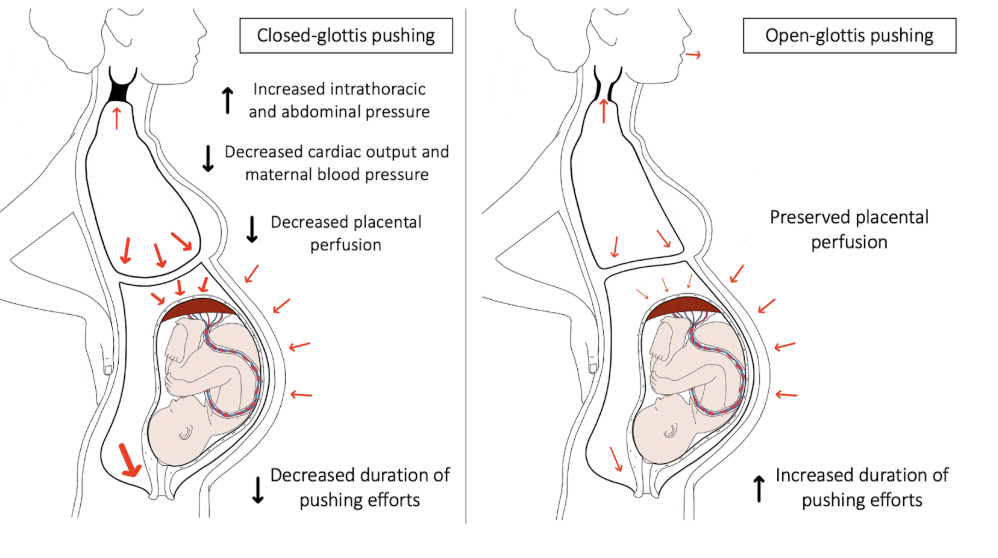
Closed Glottis
Closed glottis or closed mouth pushing is what most of us are probably familiar with. Other names for this technique are “purple pushing” or “valsalva maneuver.” This is when you take a deep breath in, hold that breath and bear down forcefully for a count (usually 10 seconds). This increases intra-abdominal pressure and the force of the push.
Advantages:
Strong and effective push
Will provide more force if required for a quicker delivery
Disadvantages:
Energy depleting
Extra stress on the pelvic floor muscles which may increase risk of perineal tearing
Reduce blood flow to both mom and baby which can increase maternal and fetal heart rate and blood pressure
Open Glottis
The open glottis/mouth technique is when you take a deep inhale and exhale through your push (rather than holding your breath). This technique can be known as “gentle pushing”, “breathing down” or “spontaneous pushing.” This approach mimics the natural urge to bear down (fetal ejection reflex) that many women feel during the later stages of labor. The benefits of this technique are essentially flip flopped with closed glottis.
Advantages:
Less energy depleting
Maintains oxygen supply/perfusion to mother and baby
Allows for more stable vitals for both baby and mother
May decrease risk of tearing and/or pelvic floor muscle trauma
Disadvantages:
Decreased force of push
May take longer for adequate push/delivery; extends the second stage of labor
May be more challenging if you have an epidural/can’t feel your pushes
Takeway
The best technique is going to be the one you choose and feel most comfortable with and you may even use a combination of both! Most hospital staff are familiar with closed glottis pushing and may coach this during your delivery based on fetal need or maternal effort. Many of my patients return for their postpartum visit and express frustration if they ended up closed glottis pushing – but please do not! It all depends on what you decide and what is best for you and your baby’s health.
The biggest question I get is “can I do open glottis if I have an epidural?” or “will I feel my pushes?” and the answer is this – if you are able to find a pelvic floor PT near you to practice open glottis pushing in the clinic, chances are muscle memory will prevail and you can push with an open glottis but again closed glottis is an option as well. You can also ask staff to help you time your open glottis pushes.
In addition to practicing different breathing and push techniques, your pelvic floor physical therapist can perform and educate you on perineal massage to reduce grades III and IV tears, and review different birthing positions that you would like to try depending on your birth plan! Still have questions or think pelvic floor PT may be for you? Please contact us!