Could GLP-1’s be the Future for Endometriosis and PMOS? What the Research Says
GLP-1s (short for “glucagon-like peptide 1 receptor agonists) have been a growing topic in recent years and I think it is time to compile current information, research, and future implications of this drug from a physical therapist’s perspective. While GLP-1s seem to have blown up overnight, most of us don’t know that they have been used since 2005 for the treatment of Type II Diabetes (that’s over 20 years!) and used for weight management since 2014 with the introduction of Saxenda (liraglutide). Wegovy (semaglutide) hit the market in 2021 followed by Zepbound (tirzepatide) in 2023.
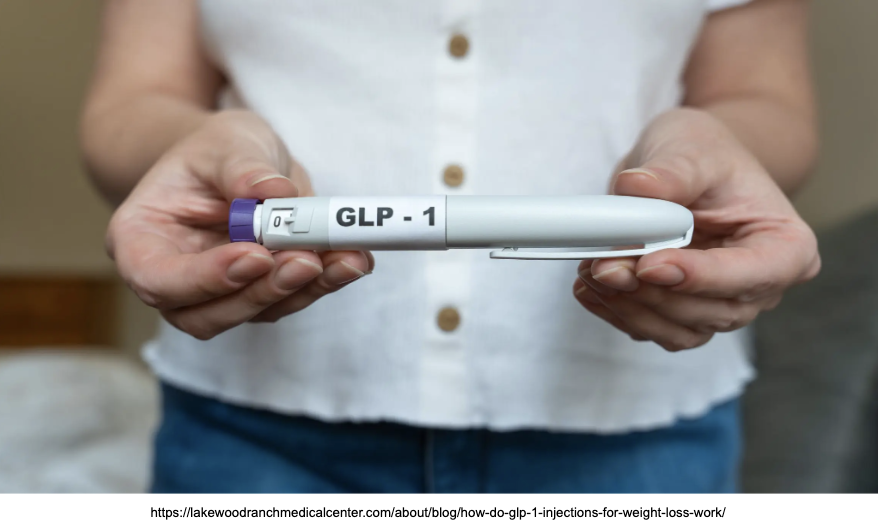
What is Glucagon-Like Peptide 1 (GLP-1)?
Current discourse around GLP-1s has led to some confusion around what exactly a GLP-1 is so I wanted to break it down here before getting into the nitty gritty. The name GLP-1 is used to describe the medication itself however GLP-1 is a hormone called glucagon-like peptide 1. The medication itself is technically a glucagon-like peptide 1 receptor agonist (GLP-1RA) – more on that later.
GLP-1 is part of a group of metabolic hormones naturally produced in your body to decrease glucose levels in response to food intake. Most GLP-1 is produced by the intestines and colon, however small amounts are produced by the pancreas and central nervous system.
The hormone works through a gut-brain-axis to reduce appetite through:
Delayed gastric emptying by inhibiting glucagon secretion and encouraging insulin secretion
Increased satiety (sensation of fullness): this occurs through the central nervous system at the level of the brainstem and hypothalamus, meaning the reduction of appetite is not at the stomach alone but also in the brain itself (learn more about the gut-brain-axis for more information)
Due to the effects on and within the brain’s reward and appetite centers, current research is investigating the role GLP-1s may play in managing substance abuse. Unfortunately I do not have enough room in this blog post to go into further detail but I am fascinated by this discovery and hope to see more information in the future.
GLP-1 Receptor Agonists
Now that we have reviewed how GLP-1 is produced in the body and its effects on the gastrointestinal and neurological systems, we can dive into GLP-1 medications. The half life of naturally produced GLP-1 is very short (1-2 minutes!) and thus GLP-1RAs were created to extend the presence of this hormone in the body.
As of 2026, there are quite a few GLP-1 medications on the market:
Liraglutide (Novo Nordisk) was the first once daily GLP-1RA injection
Brand names Victoza (Type II Diabetes) and Saxenda (obesity)
Dulaglutide (Eli Lilly) was the first once weekly GLP-1RA injection
Brand name Trulicity for Type II Diabetes
Semiglutide (Novo Nordisk) is available in both a once weekly injection and a once daily pill making it the first oral GLP-1RA option
Brand names Ozempic (Type II Diabetes) and Wegovy (obesity)
Tirzepatide (Eli Lilly) was a ground-breaking discovery as it was the first of its kind to act as a dual agonist of both GLP-1 and GIP receptors
Brand names Monjaro (Type II Diabetes) and Zepbound (obesity)
Orforglipron (Eli Lilly) is the first non-peptide once daily oral GLP-1RA – this is an important breakthrough as oral Tirzepatide must be taken while fasted and Orforglipron does not – which can improve patient compliance and satisfaction
Brand name Foundayo for obesity
As mentioned before, this class of medication was initially developed for the treatment of Type II Diabetes (T2DM) due to its ability to improve insulin secretion and regulate blood glucose levels. In the last decade these medications have also been used to manage obesity and encourage weight loss. Per ADA 2023 guidelines, GLP-1s are now recommended for reducing cardiovascular risk and chronic kidney disease (CKD) as studies have shown GLP-1 has a protective effect on the cardiovascular and renal systems regardless of patient weight loss.
In addition to cardiovascular and renal systems, GLP-1 is also utilized in various areas of the body including the lungs, liver, central nervous system, gastrointestinal tract, skin and vagus nerve. Due to its wide distribution in the body, GLP-1RAs are currently being studied for the management and treatment of:
Knee osteoarthritis
Sleep apnea
Steatohepatitis/MASH (formally known as fatty liver)
Anti-inflammatory conditions including PMOS, IBS and Endometriosis
Neurological diseases such as Alzheimer's and dementia by regulating key enzymes and the release of certain neurotransmitters
Cardiovascular conditions
Kidney disease
Inflammatory conditions and chronic pain
Proposed Mechanism of Action of GLP1 (2024)
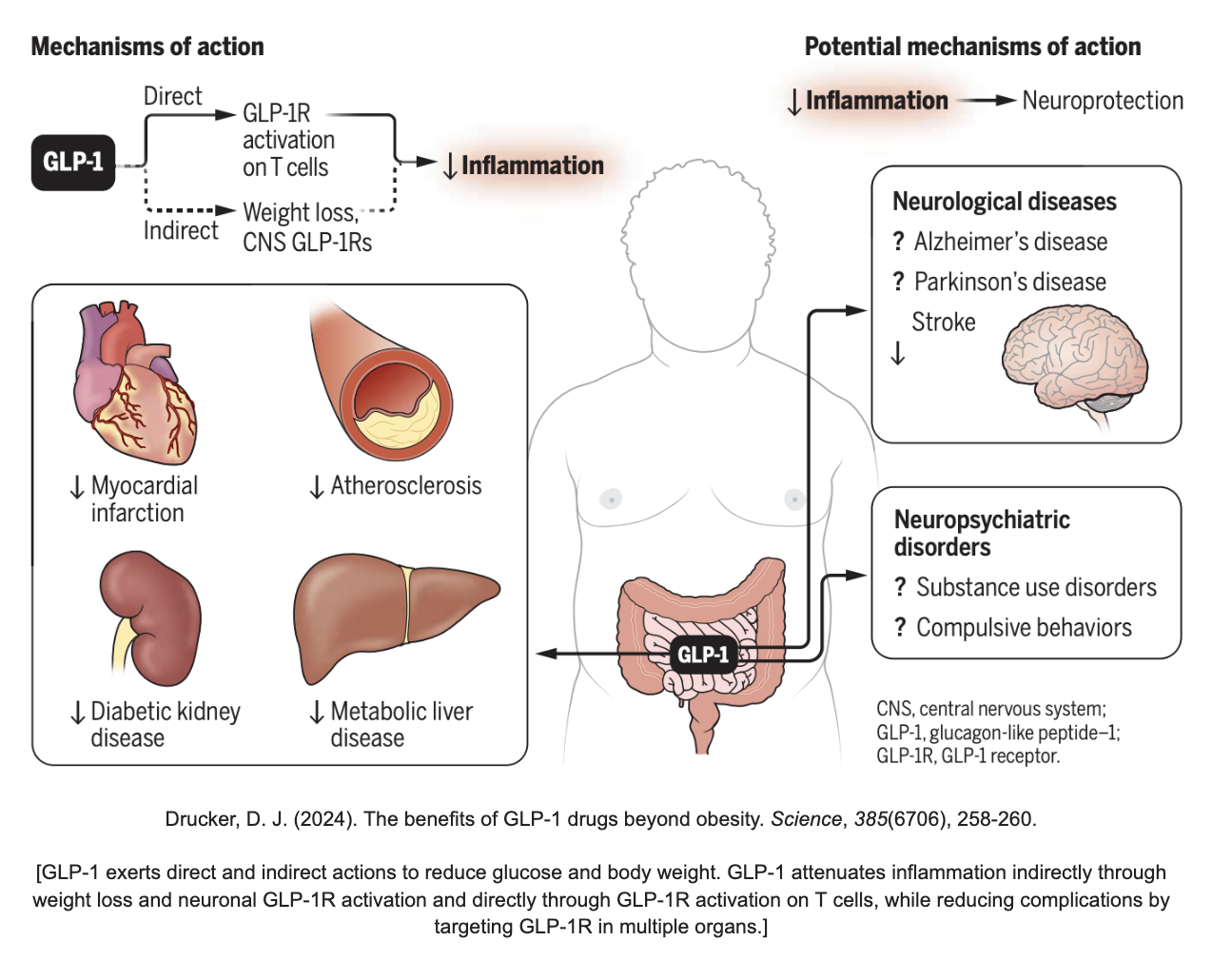
[GLP-1 exerts direct and indirect actions to reduce glucose and body weight. GLP-1 attenuates inflammation indirectly through weight loss and neuronal GLP-1R activation and directly through GLP-1R activation on T cells, while reducing complications by targeting GLP-1R in multiple organs.]
I know what you might say – that all of these conditions improve because of weight loss. While I will not argue there is an influence of weight and body fat percentage on various health conditions, I am excited to share that some studies are not looking at weight at all. Researchers are looking at how GLP-1 interacts with neurotransmitters, cellular membranes, brain activity, protein expression, etc. meaning this hormone is affecting multiple body systems at the level of the tissue itself, rather than assuming the improvements are from weight loss alone (amazing!!).
Groundbreaking GLP-1RA trials (STEP, LEAD, SELECT) have noted improvement in multiple body systems and conditions independent of patient glucose control and weight loss, meaning there can be benefits to taking a GLP-1RA if one is not obese or does not have meaningful weight loss (defined as 5-10% of bodyweight). In fact, some neuro and cardiovascular protection mechanisms were found before weight loss occurred at all.
Endometriosis and PMOS
Polyendocrine Metabolic Ovarian Syndrome (PMOS), formally known as Polycystic Ovarian Syndrome (PCOS), is a disease characterized by elevated androgens (male sex hormones) which can manifest in female bodies as impaired ovulation, infertility, obesity and other metabolic syndromes. When accompanied by insulin resistance (IR) and dyslipidaemia, PMOS can lead to elevated cholesterol, high blood pressure, and diabetes. Additional studies have indicated a causal relationship between IR and all clinical symptoms of PCOS. GLP-1s are being introduced in the treatment of PCOS because of their ability to reduce weight and improve IR. Interestingly, GLP-1RAs not only can reduce the weight of patients with PCOS, but also have a positive effect on the levels of androgens (thought to be the driver of PCOS). However we do not fully understand the mechanism of action of GLP-1RAs in the treatment of PMOS and further research is required.
Endometriosis is a chronic, inflammatory, estrogen-driven disease characterized by the growth of endometrial tissue outside of the uterus. It has been well established that local inflammation and immune dysregulation are features of endometriosis, as multiple inflammatory markers are elevated in those with the disease. Researchers have begun to investigate if the anti-inflammatory properties of a GLP-1 can help manage the disease. Studies show when inflammatory stimuli are increased this leads to GLP-1 secretion, and thus GLP-1 modulates inflammation in multiple sites of the body. Furthermore, GLP-1 shows anti-inflammatory effects on multiple body systems by reducing the production of inflammatory cytokines and infiltration of immune cells in the tissues. GLP-1RAs are emerging as a potential therapeutic method for treating other inflammatory diseases such as neurodegenerative disorders, arthritis, endometriosis, and inflammatory bowel disease.
Lifestyle Recommendations While on a GLP-1 from a Physical Therapist
I am sure by now you have heard of the various side effects of GLP-1s from constipation to gastroparesis, but I want to clarify there are other “side effects” discussed that are not side effects from the medication itself but a side effect of weight loss. These include:
Muscle loss or atrophy
Reduction in bone mass/osteoporosis
“Ozempic face”
Hair loss
Fatigue/weakness
These do not happen from the GLP-1 medications themselves but from caloric restriction, and can happen to anyone regardless of if they are taking the medication or not. I do however want to highlight the importance of discussing these medications with your doctor prior to taking them. GLP-1s have been associated with complications of the pancreas, GI system and gallbladder, and your doctor can help determine which medication, if any, is right for you.
As a physical therapist, I think we have a unique role to play in the rise of GLP-1s and can educate patients on safe weight loss and prevent any unfavorable outcomes. While losing weight, it is important to maintain a healthy diet with adequate nutrients with a focus on protein to prevent muscle atrophy. It may be worth adding additional nutritional supplements or vitamins if your doctor or dietician believes this would be beneficial for you. To prevent bone mass and muscle loss, resistance training is essential. Standard resistance training recommendations for the average person are a frequency of at least 2 days a week with emphasis on major upper and lower body muscle groups. The American College of Sports Medicine (ACSM) recommends 150 mins of moderate physical activity and mobility/flexibility training 2-3 days per week as well. Regardless of taking a GLP-1 or not, it is recommended people make lifestyle modifications to maintain health and fitness levels, and prevent weight gain in the future.
Looking Ahead
ADDITIONAL DETAILS FOR PODCAST
Sources
https://www.authorea.com/doi/pdf/10.22541/au.177194722.27223197/v1 → GLP1 reduced endo symptoms, however reduction in symptom intensity correlated with amount of weight lost → helpful article but looking for more without the weight reduction
On google scholar however does not appear to be journal article: https://www.shemed.co.uk/blog/weight-loss/endometriosis-and-glp-1-agonists but does mention the anti-inflammatory properties with links/references
https://pmc.ncbi.nlm.nih.gov/articles/PMC10230051/ → anti-inflammatory article 2023
Another anti-inflammatory https://pmc.ncbi.nlm.nih.gov/articles/PMC8799666/ for joint OA in animals
Depression/anxiety https://www.sciencedirect.com/science/article/pii/S0306453015300184
Therapeutic effects https://pmc.ncbi.nlm.nih.gov/articles/PMC8419463/
Endometrial cancer benefits: https://pubmed.ncbi.nlm.nih.gov/39429275/
GLP1 general info: https://www.ncbi.nlm.nih.gov/books/NBK551568/
Endometrial receptivity: https://obgyn.onlinelibrary.wiley.com/doi/full/10.1111/aogs.15010
Benefits other than weight loss: https://harmonycompound.com/wp-content/uploads/2024/07/The-benefits-of-GLP-1-drugs.pdf
Substance abuse: https://www.sciencedirect.com/science/article/pii/S1043661824002573
Gut-brain axis: https://pmc.ncbi.nlm.nih.gov/articles/PMC3280675/
GLP1 general: https://static1.squarespace.com/static/69b069964a0774179afbcc48/t/69de940463f66d2c0b2b3e3c/1776194565789/DruckerNRDD2025.pdf
https://www.sciencedirect.com/science/article/pii/S1043661825004700 history of GLP1
https://www.lilly.com/news/stories/what-to-know-about-retatrutide new GLP1 in development by Eli Lilly
Endo https://pmc.ncbi.nlm.nih.gov/articles/PMC7980953/pdf/nihms-1572578.pdf
https://www.mdpi.com/1422-0067/23/17/9583 anti-inflammatory
https://journals.sagepub.com/doi/full/10.1177/20420188231222367 anti-inflammatory
https://acsm.org/education-resources/trending-topics-resources/physical-activity-guidelines/ ex guidelines
Detailed active GLP1 history for ACTIVE medications
As of 2026, there are quite a few GLP-1 medications on the market:
Liraglutide (Novo Nordisk) was the first once daily GLP-1RA injection
Brand name Victoza for the treatment of Type II Diabetes
Brand name Saxenda for obesity and weight loss
Dulaglutide from (Eli Lilly) was the first once weekly GLP-1RA injection
Brand name Trulicity for Type II Diabetes
Semiglutide from Novo Nordisk is available in both a once weekly injection and a once daily pill making it the first oral GLP-1RA option
Brand name Ozempic for the treatment of Type II Diabetes
Brand name Wegovy for obesity and weight loss
Tirzepatide from Eli Lilly was a ground-breaking discovery as it was the first of its kind to act as a dual agonist of both GLP-1 and GIP receptors
Brand name Monjaro for the treatment of Type II Diabetes
Brand name Zepbound for obesity and weight loss
Orforglipron from Eli Lilly is the first non-peptide once daily oral GLP-1RA – this is an important breakthrough as oral Tirzepatide must be taken while fasted and Orforglipron does not – which can improve patient compliance and satisfaction
Brand name Foundayo for obesity and weight loss